
 If you tried to go anywhere over the past week, you already know the story. Over 72 million Americans hit the road and skies for the holiday week, setting an all-time record. Airports are completely maxed out, hotel rates are up nearly 30% across the board, and the traditional summer hotspots have officially become high-stress zones.
When everything costs more and everywhere is crowded, it forces us to ask a fundamental question: What are we actually paying for?
After 30 years in this chair, I’ve seen the definition of a “luxury vacation” change a dozen times. It used to be about the gold-plated fixtures, the marble lobbies, and the exclusive, high-status locations. But as we cross the midpoint of 2026, the global luxury travel market is undergoing a massive, beautiful evolution.
The industry is calling it the era of “Bare Luxury.” Savvy travelers are realizing that fast consumption, constant digital stimulation, and the pressure to optimize every single hour of a trip isn’t a vacation—it’s just relocation. True luxury in 2026 isn’t about adding more to your itinerary. It’s about having the wisdom to strip away everything that doesn’t matter.
Redefining “Just What Matters”
The core philosophy of Bare Luxury is simple: removing the unnecessary distractions of the modern world so you can actually experience nature, connection, and wellbeing.
Think about the finest moments from your past vacations. It’s rarely the commercialized tourist traps or the crowded line for a selfie. The memories that stick for decades are almost always the quiet, unscripted ones.
-
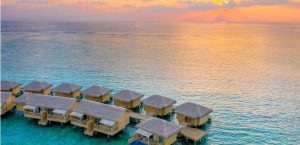
It’s walking barefoot on a completely private, pristine beach in the Maldives or French Polynesia, where your shoes are taken at check-in and the only calendar you follow is the sunset.
-
It’s an authentic, slow-paced African safari in Botswana or Namibia, where your phone goes into the lodge safe and your focus shifts entirely to the horizon.
-
It’s a deep, multi-generational family retreat in a converted European manor home, where the days are long, the meals are local, and the conversations actually have room to breathe.
People are no longer traveling just to escape their lives; they are traveling to recover their humanity.
 The Cost of the “Everywhere” Trip
According to recent 2026 travel data, travelers are actively expanding their budgets by nearly 17% specifically to upgrade their accommodations and secure more secluded, remote destinations. They aren’t trying to find a cheap deal; they are trying to protect their peace of mind.
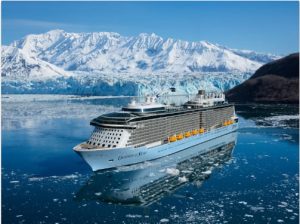
Because geographically isolated and highly protected destinations—like Greenland, polar expeditions, or private island sanctuaries—naturally limit the number of guests, they require a premium investment. But that investment guarantees the one asset that money can rarely buy in the modern world: uninterrupted space.
An algorithm can find you the most popular, highly reviewed resort on a crowded coastline. But insight is knowing when a destination has crossed the line from “vibrant” to “overwhelming.” Insight is understanding how to craft an itinerary that protects your family from sensory overload, ensures real privacy, and emphasizes personal fulfillment over material indulgence.
 Step Into the Quiet
If you are looking at the crowded summer headlines and wondering how to plan your next great escape, my advice after three decades in this business is to change your target.
Stop planning trips around what looks impressive on a screen. Start planning trips around how you want to feel when you return home.
If you are ready to experience the quiet power of “Bare Luxury”—where the logistics are entirely handled and the distractions are completely removed—let’s map out your next intentional journey. The quiet corners of the world are waiting for you.